On Simplicity: Curly Got It Wrong

Reducing a life or business strategy to one thing leaves too much out.


Remember the movie City Slickers? Curly was the crispy, gruff drover.  Played by the late, great Jack Palance in an Oscar-winning performance, Curly is in some minds immortalized for his advice to Billy Crystal’s character Mitch in that movie; it was his philosophy of life.

The exchange goes like this:

Curly: Do you know what the secret of life is?

[holds up one finger]

Curly: This.

Mitch: Your finger?

Curly: One thing. Just one thing. You stick to that and the rest don’t mean shit.

Mitch: But, what is the “one thing”?

Curly: [smiles] That’s what you have to find out.

The secret of life is figuring out your “one thing.”  That’s what Curly had to say: Find the one thing, and the “rest don’t mean shit.”

But you know what?

Curly was wrong.  Reducing your life, work, or strategy to one thing leaves out too much, and it also leaves out the art of having to do more than one thing.

Simplicity, then, is too simple sometimes.

Life should be as simple as possible, and not one bit more simple.  That means that saying life is about one thing is probably insufficient for anyone who takes the time to read this blog.

I know executives who say that their “one thing” is financial performance. I know others who say it’s their people. I know others still who will say it’s their faith. But I don’t know a single one who can do one thing to the exclusion of all others and find success.  It may be true that none of us can truly serve more than one master, but it’s also true that we all have to attempt to do so.

That’s where too many executives fail: they talk simple, but life isn’t simple. They say, “Just grow the company and all will be fine,” but they end up with an Enron.  They say, “Just treat people well and all will be great,” and they end up with General Motors.  They say, “Worry about the customer and we’ll be fine” and they end up like WebVan.  Or they say, “Just do what gets us compensated,” and they turn into Lehman Brothers.

One thing can lead to dark stuff, and that’s why I’m writing this: as an antidote to “one thingism.” You may work with a one-thing executive, and that may work well for him or her at a moment in time, but for all the talk of one thing, actions have to take into account many things.

Any CEO worth her salt has exceptional focus.  That focus may be on building a team, closing a financing, developing a product, or influencing stakeholders.  Any of these could be a given CEO’s one thing, but the truth is that they have to be good at balancing their “one thing” at any given point. CEOs have to build teams, and boards, and products, and customers, and relationships, and bad CEOs get “one thingism” in their blood and never let go.

Notably, though, bad strategies do too. How often do we as management strategists find executives or their critics attempting reductionist, one-thingist views of strategy.  They get so high-level, so abstract, that they end up achieving a grand unifying theory of organizational strategy that is significant to no one.  They “one thing” their strategy to empty pablum like “focus” or “innovation” or otherwise.

Reality is messy.  Practical strategy is tough.

So, if you are working really hard to simplify and synthesize your strategy or focus, congratulations, that’s not a bad thing. A strong strategy should be reducible to simple terms, but no more simple than necessary.

In short, if you are simplifying beyond usefulness.  Watch out.

I suspect that a mountain of Dilbert cartoons could be drafted on the backs of strategy statements that state nothing.  Some jewels:

“We will be a growth company.”

“We will build a great company.”

“We will be innovative leaders.”

“We will have a winning culture.”

“We will be a community of leaders.”

Perhaps the best way I can convey this notion to more seasoned executives is to use an interesting case study:  A survey of millennials about their life goals showed that more than 80% of them had a major life goal to “get rich.”  That means they wanted to make a lot of money as a goal in itself.  This is a generation that is being somewhat venerated for its focus on purpose and meaning.

If you are on older worker or executive, with a family, hobbies, pursuits, relationships, and other sources of meaning that do not derive from your bank account, think about how hollow the goal of merely making money is to a good life.  You’ve probably had friends who have hurt themselves and others in pursuit of mere money.  Money isn’t an end (okay, you and I both might say “but it helps…”).  It’s a representation of value provided to someone else.

It’s a “one thing” that has no meaning to anyone other than the person who collects it.

And, that’s what’s dangerous about one thingism in strategy.  Your one thing (earnings growth, people development, customer service) may not matter one whit to a truly rich strategy.

Reducing a life or business strategy to one thing leaves too much out.

Now, a challenge for you:  Take a moment and leave a reply on this post about a “one thing” strategy that has or hasn’t worked.  What’s your gut reaction to this post?

Christmas and The Real Meaning of Business

Finding “real meaning” in business gets personal, gritty, and small. 


‘Tis the season. Christmas season, I mean.  And, it has me thinking.

We sit on the threshold of a holiday that for most comes to symbolize the warmth of gift giving and the joy of a pause in life to reflect on gifts received.  Sure, it’s commercial.  Sure, it’s loaded with obligation to dangerously hollow things like no other holiday in the western world is.

But it sure is fun.

Driving along a few days ago, I was fortunate to hear an ad on the radio.  “Come, learn the real meaning of Christmas” it said.  It then went on to outline the extravaganza that a large church was investing the time, money, and people into to outline the “real meaning of Christmas.”  It was the “real meaning” that struck a chord with me.  I wondered what innocent bystanders (that is, people who are neither Christian, nor steeped in western “Christmas” tradition) would say the “real meaning” of Christmas is by observing the actions we take during the season.

Would they say the real meaning was entertainment?

Gift giving?

Celebration of the birth of a single individual so long ago?

Establishment of the basis of a world religion and interpersonal philosophy?

I suspect that the innocent bystander would attend the Christmas extravaganza and come away with a sense that Christmas is quite a show, but perhaps not a sense of the”real meaning” of Christmas.  They wouldn’t understand the deeper personal and metaphysical meaning of Christmas from watching a show any more than from seeing a Christmas tree…

…and, you know what?  That’s fine.  You know why?  Because real meaning comes from experience, not an extravaganza. A life changed through the Christmas story rarely (if ever) happens because “you said so.”  It happens through reflection and immersion and individual commitment and confession.

In other words, It’s what’s inside the box that counts…Not the wrapper.

And that, my friends, is where real meaning in the Christmas sense has applicability to real meaning in a business sense.

A legion of consultants, practitioners, executives, and managers have put their faith in the power of extravaganza to create change.  They–like the church in the radio ad above–put together light, sound, and live animal shows (ok, maybe not the live animals) in hopes of creating an emotional experience for their organizations or clients. They hire outside speakers, event planners, and communication experts to expound on the great position a company is in or the great new direction it will take.  They make it clear that a charged emotion is the key to alignment with strategy.

And they are right.

But they are wrong.

Because a charged emotion may be necessary to conversion, but it’s insufficient for sustained change.  All the focus is on the wrapper, and not on what’s inside the box.

So, if excitement about a clear vision delivered in a compelling way is the wrapper, what is inside the box when it comes to corporate strategies that actually steer an organization?

Well, personal meaning may come first.  Does the steering of the strategy touch on the personal hot buttons of the organization.  This can be purpose (what are we doing for the community, our customer, etc.?).  It can also be self interest (what’s in it for me and my career?).  It can also be about others (how does this strategy impact Milton down in the basement?).  Personal meaning comes in different flavors.  One wrapper can seldom hit on them all.

The second is probably leadership credibility.  If I see the extravaganza, it hints at credible change to come. A leader is born.  A changed organization, renewed purpose, or new challenge are all both frightful and compelling things. They need credible leadership.

The third thing inside the box may have to be an honest appraisal. And, this is where the wrapper of an extravaganza most often falls short. In the push to put a glossy finish on the strategic vision of a company’s strategy, we lose the factual appraisal that we just rode for miles in pain on the back of a donkey and gave birth in a stable after being rejected from the local hotel.  Our circumstances aren’t glossy.  They are as humble as possible.  Sometimes, we have to admit it once we are inside the box.

The fourth thing inside the box deals with what people have to bring…It’s the requirements.  Our glossy wrappers tend to minimize requirements.  They tend to underplay the difficulty of actually steering an organization in a new direction. They underplay the late nights.  They underplay the hard conversations.  They underplay the personal commitments that will be challenged, change, or even cancelled. In the Christmas story, we focus so much on the baby in the manger that we often forget the journey of the kings, or the sacrifices of the parents. Transformative change comes with requirements.  Those are hard to convey in a glossy wrapper.

And, finally, I’d have to say that from personal experience we all need to have a sense of the consequences likely from the strategic vision.  Glossy extravaganza wrappers are great at booming out a new vision, but awful at being candid about the consequences of that vision. The Christian tradition actually does this quite well, once you get past the secular Christmas wrapper.  Adhering to the true meaning of Christmas is actually hard. It was likely hardest for the man the baby in the that feeding trough eventually became. But, it was still hard for anyone who chose to actually follow.  In corporate terms, consequences belong inside the box. Not all will make it to glory in a given strategy.  It’s ok to say so…Humane, even.

In this holiday season that has become so overrun with glossiness.  Let’s not forget the dank and, yes, small circumstances that underpin the real meaning.  The thing that corporate strategies that actually create changed organizations have in common with Christmastime conversions that stick is a focus on the gritty, dirty, and simple realities inside the box at the expense of the glossy, gold plated wrapper on the outside.

Maybe your organization can benefit from some time inside the box.  If you are reading this…Maybe it’s up to you.

Merry Christmas.


The Ends of Strategy Are What Count

A strategy is only a strategy if it survives a test of its logical ends.

As someone who meditates on strategy across sectors, I run across a lot of very natural misconceptions about the topic.

One of the most egregious, and most dangerous, is the confusion of actions with strategy.  An action–like running, standing, striking, speaking or otherwise–is not a strategy.  Most executives understand the difference; but some do not.

Some think that an action is a strategy. But, they forget a basic tenet of strategy.

Strategy is an argument.  It’s an idea. It’s a view to and end. Action forms the basis of execution–strategy’s greatest fulfillment–but is not a strategy in and of itself.

Which brings me to my point: Actions without testing of logical ends can never form the basis of an effective strategy.

For example, a strategy that is explicitly focused on achieving an end state of cost leadership is very much a viable one.  Commodity providers pursue such strategies all the time.  Such a strategy is internally consistent when logical ends testing says that being a cost leader is a sustainable position.  In markets where it applies (coal mining, not luxury goods) cost leadership, in other words, confers competitive advantage.

On the other hand, a strategy that is based only on an action (not an end state) like cost reduction is no strategy at all, unless its logical ends hold water.  A company cannot cut its way to prosperity unless the cutting confers competitive advantage.  The act of cutting costs in and of itself confers no competitive advantage at all, any more than the act of investing randomly does.  Yet, we see companies and executive teams whose “strategy” is implicitly focused on shrinking a cost base without achieving cost leadership.  Such a “strategy” fails the ends test.   It also fails the vision test.

The integrity of a strategy depends on its surviving a test of its long run sustainability.  Cost leadership, value leadership, design leadership, distinctive insights, distinctive talent, and any number of other things can confer sustainable competitive advantage when played out to their ends.  On the other hand, a “strategy” that merely harvests returns while delaying inevitable failure is only a strategy insofar as it benefits stakeholders of the soon-to-fail organization–it doesn’t benefit the organization itself.

Actions can be strategic, but they cannot be strategies. Strategies point to wins.  Actions?  Not so much.

Take a moment and play out your strategy.  Think about where it leads.

6 Challenges Today’s Executives Face

Periodically, I’ll post on some of the implicit but common executive challenges I observe while carrying out my practice.  This is one of those posts…

The context of this post is simple:  I have the opportunity to work across numerous executive teams and within institutions of various sizes.  In nearly every case, individual leaders consume themselves with how different their organizations or their problems are.  I figured I’d take a moment to reflect on some of the common themes that I see leaders dealing with.  Perhaps it will strike you in a way that’s helpful.

So, here are six challenges that executives I’ve worked with face–whether they know it or not–and an accompanying quick note on ideas to overcome each of them.

The Six Challenges

1. Ego Depletion

The Challenge: We have only a limited capacity to make considered, controlled decisions.  But, many of us (you and me) have an unlimited number of decisions we could make in a given day.  Executives have a relentless access to decisions. The pace of information flow these days enables it.  If you are like me, you probably get up and check email sometime in the morning, starting the flow of decisions you must make.  You also (possibly) check email at the end of the day, and fire off a few more decisions or opinions.  In between, you’ve probably had to make decisions all day.  Such is life, but if you think about your ability to make decisions in a given day as finite, you’ll understand the concept of Ego Depletion.  You may laugh and say you know people whose egos never deplete, but still.

Ways to Overcome it:  This one is easy and hard at the same time.  Delegate choices.  Be deliberate about the scope of decisions you’ll take.  Keep your focus on the major things in your professional (and personal) life.  Know what matters to you (and, hopefully, it’s not everything).  Alsoand most critically, realize that your capacity to ponder and decide on minutiae may be exceptional, but that you–as executive–can deplete the capacities of the people around you.  Yes, you can exhaust your subordinate’s ability to make good decisions simply by placing too much focus on things that may not matter much.

2. Separating Signal and Noise 

The Challenge: We face a tremendous amount of information flow that amounts to noise in our daily professional lives. By noise I mean, literally, junk that has no meaning or implication for work or play.  Examples that executives face include internal rumors, short term changes in customer behavior, and macro-level news that people will view as significant, but whose impact is negligible on daily business.  The challenge arises when executives feel the need to justify a response or reaction to the noise.  One of my favorite momentary pastimes is to flick the “Stocks” app on my iPhone a few times a day and get a look at the headlines for the S&P 500.  Without fail, the headlines attempt to explain a 0.50% change in the market index.  It’s linked to jobs, or Greece, or some other secular trend.  It would be amusing if you didn’t actually think about the people spending their lives conjuring such headlines.  Folks, sometimes it’s just noise.  Know the difference.

Ways to Overcome it:  I’m a fan of the old Army saying “Once is happenstance, twice is coincidence, and three times is enemy action.”  It’s okay to level yourself out and wait out the first bit of information as potential noise.  Practically speaking, when presented with challenging but not-yet-significant information, be willing to ask “what would make this information more than just noise?”  Know when enough is enough.

3. Making Talent Mobility an Advantage

The Challenge: In the immortal words of Billy Joel:  We Didn’t Start the Fire.  Talent mobility is not really new anymore; but the amount of information that talented people have at their fingertips has changed drastically.  What this means is that the most driven, talented individuals–usually the ones who actually know their value in the marketplace–are much more likely to vote with their feet.  This challenge is common, but it’s increasing as talented people have more and more access to inside information on both their own company and companies they might consider joining.  The implication of this challenge is that some employers will suffer mightily from adverse selection as their best employees decide to ply their trades elsewhere.  The current generation of 50 something’s may cling to the notion of loyalty as something an employer gets value from, but younger workers are starting to know better. Your cost of talent is high if you can’t engage people and propagate vision. It is infinite if you are dishonest and people catch on.

Ways to Overcome it:  In reality, talent mobility is only a challenge to companies and leaders who place limited focus on engaging and exciting people.  Companies who have great places to work will get richer because they will have a lower cost of talent.  Companies who can no longer hide their really bad workplaces will get poorer and engage in more mercenary practices to attract talented people.  Propagate a vision, engage people, know what they think.  Most of all, seek understanding. Listen.

4. Avoiding A False Sense of Disruption

The Challenge: Make no mistake some sectors are being disrupted mightily, and the challenge for executives is how to move faster.  Still, there is an unhealthy proportion of executives out there who, like Don Quixote, are out tilting at windmills when it comes to disruption.  They are looking for a disruptive fight at the expense of handling daily business.  So much ink is drained on the topic of disruption, innovation, and creativity that the average executive sees it as a panacea; when in reality–and in the average business–there is far more value in having a healthy business with solid people, processes, performance, and prospects.  True disruptive innovation takes a long time in MOST sectors.

Ways to Overcome it:  First of all, you need to know what disruption really is.  Are you truly changing the basis of competition, or are you simply selling that notion.  When it comes to disruption, be careful not to assume your sector is different in terms of the pace of change without testing the notion.  Know that investments in disruptive business models and technologies are important, and needed; but be sure to pursue them as a piece (often a small but focused piece) of a healthy business portfolio.  Saying that you are going to make a business healthy by creating the next better mousetrap ignores the history of disruption.  Avoid the false security it provides.

5. Avoiding Tyrannical Short-Termism

The Challenge: Short-termism is the opposite challenge from the “False Sense of Disruption” outlined above.  Because I see many different companies in operation, I see both of these faces show themselves. Sometimes they show themselves within the same company.  The challenge here is that executives, faced with near term earnings targets and expectations; actually underinvest in capital assets and innovative improvements to process, product, or people engagement.  They lack an emphasis on longer term, disruptive, or even incremental business model or product improvements because they can’t afford them. In reality, they can’t afford not to have them in the portfolio.

Ways to Overcome it:  A balanced portfolio is the key here.  The average executive gets this notion; but the average executive also needs someone to keep him or her honest when it comes to rationalization of investment levels in new or interesting businesses.  Typically, this challenge rears its head at the margin.  It’s in questions like “Do we really need to have that many sales people pushing our new product?” or “Does that expensive training program really need to be held this year?” Keep people close who can argue for the balanced portfolio.  Oh, and listen to them.

6. Making Strategy Flexible

The Challenge: I am approached monthly by companies that desire a way to think about strategy differently.  They want a strategy.  The biggest challenge of strategy formulation, however, is breaking through the mindset that a “strategy” is a set thing.  Set piece battles are getting increasingly rare in business (they will exist as long as privileged assets exist, but that’s a different post).  The proverbial strategy in a booklet gathering dust on the shelf is proverbial because it has happened far too often. Usually, this occurs when a strategy is built to placate senior management or a board vs. to truly inform the approach to business.  This is a continuing challenge for executives.  Strategy is not deterministic.  It is subject to random changes. It is subject to competitive moves.  It has to be adaptive.  Executives face the challenge of making it so.

Ways to Overcome it:  Strategy is a living thing.  The first way to overcome this challenge is to embrace the adage that “no plan survives contact with the enemy.”  In business it’s perhaps more polite to say “no plan survives implementation intact.”  Strategic plans are no different, so start with that in mind. Understand the boundaries within which a given strategy remains intact, and the triggers that would make a refreshed or different approach appropriate.  This is a big challenge, and one I have spent a lot of time on in the past several years.

There you have it.  Six challenges that I see as pivotal for current executives.  If I’d had more time and a better text editor, I might have made this shorter, but I hope you get the gist.

I’d love to have your thoughts.

Yahoo and The Danger of Irrelevant Benchmarks

Morgan Stanley says that relative to Facebook, Yahoo is fat. Well…Relative to Usain Bolt, we are all slow.

Morgan Stanley has posted a report on Yahoo that urges Yahoo’s CEO to cut 1,400 jobs to keep earnings flat.

The driver?

Yahoo’s revenue per employee is sub-par relative to a list of other seemingly similar “names.”

Here’s a link from Business Insider that outlines the situation.

The insight

This is not a post about Yahoo, even though the pursuit of cost cutting there seems to be required, and the process seems to be misguided, I’ll leave that to another post.

This is a post about knowing your benchmarks.

Morgan Stanley produced this exhibit to show that Yahoo’s revenue per employee is out of whack.


What I see is a list of “tech” names.  That’s easy enough.

What I also see is a list of companies with vastly different business models.  Amazon is a conglomeration of retail, digital, and media.  Priceline sells travel.  PayPal is a financial services company.  I actually have no idea what AOL does these days (okay, that’s a bit tongue in cheek, but still.).

The implication…

The point is this:  If you are a shotputter, it’s irrelevant how fast you run compared to Usain Bolt.

We are all slow compared to Usain Bolt.

Morgan Stanley is committing an analytical sin here, and it’s an easy one to commit:  That of the inappropriate first order comparison.

Inappropriate first order comparisons tend to come up with executives and analysts when they are either ill-informed (actually less common) or just looking for simple (or lazy) comparisons (actually more common).

If I have a company in the tech sector, it seems simple to compare myself to another company in the tech sector; but the reality is much more complex.  Business models are highly divergent, even within the same “sector” like tech.

That’s not to say that a company shouldn’t look to others to compare its business model and think strategically about change; it is to say that simply doing mathematical benchmarks without considering business model differences is a loser’s game.  

So What? 

Morgan Stanley looks at revenue per employee and says “cut employees.” We could just write that off to the naivete of a Morgan Stanley analyst who has never run a business.

But…

…A lot of executives manage by spreadsheet in this manner.

A better way is to do a second order scrub for business models, scrutinize the business model, then execute.

The reason is this:  Trying to take a “square peg” business and benchmark it against a bunch of “round peg” businesses can lead to demoralizing results.  The demoralizing results usually hit the organization in the near term–and those can be papered over by savvy executives.  The demoralizing results hit the shareholders at a later date.  The crackpipe of layoffs-as-an-accounting-measure, once given to the market, investors, or–and I hope this isn’t your company–executives, is hard to get away from; and done (as Yahoo seems to be doing) without rhyme or reason, it can kill companies.

Ask Al Dunlap.  Well, no, don’t ask him.  Ask people who worked at Al Dunlap’s companies.

Never let a false comparison drive you to manage by math.  Never let an “easy” index comparison let you get away from the fundamentals of whether that index actually fits your business.

Beware false benchmarks. They can destroy you.

What Entrepreneurs Know that Corporate Execs Forget…

By looking at what entrepreneurs do well, the rest of us can learn something about strategic decision making and action.

It was 1997.

I was lucky enough, though I didn’t know it at the time, to score an internship as employee number 5 or 6 at E-Loan, Inc.  Such was one of the benefits of being a college student in the heart of Silicon Valley:  There were a lot of start-ups, and there was a lot of work to be done; so a guy like me with no experience beyond manual labor, retail, and a stint as a bouncer could find himself uploading the entire database of lending products to the start-up’s website every morning–performing the critical action of the company’s existence.

In the months I spent at the company, which spanned the launch of the website and the tripling of the employee base, I gained a lot of respect for what high-pace entrepreneurship actually is.

The rest of the E-Loan story is a lot like many others of the dot com era:  Growth, then a hot IPO, then challenges, then acquisition, repositioning, and ultimately in the years that have passed, a company that resembles the original only in name.

The rest of my story is a bit different. I took that experience, along with some other quality early-stage investment experience, and ended up as a larger company consultant and diversified manufacturing executive.  Those experiences have been exemplar of the sort of yin and yang learnings that my own life trajectory has offered; and that frankly inform the bulk of this blog.

Insight from all of that brings me to this:

Larger company leaders can learn from entrepreneurs how to occupy the “pinnacle” of strategy.  That pinnacle is the moment of decision.  It’s the decision seat.

Entrepreneurs do this well because, in essence, it may be all they have.

Large company executives do this poorly because they have the luxury of resources and time.

But they (perhaps, you?) can get better at it.

The Pinnacle of Strategy

What’s the pinnacle of strategy, and why the mountainous metaphor?  In short, it’s the decision seat that stands atop the mountain or molehill of data, insights, analysis, and synthesis of a point of view.

As a McKinsey alumnus, I have been well steeped in (and am a proponent of) Barbara Minto’s “Pyramid Principle” method of thinking and communicating.  The top of the “Pyramid” in action-oriented logic is a synthesis of a point of view. Only far too often, a point of view at the top of a pyramid lacks a pinnacle. That pinnacle is occupied by a decision maker, steeped in the rest of the pyramid, but willing to drive a decision.

Often–particularly in large company bureaucracies–the seat is vacant.  That reality is what gives so many consulting reports their negative dust-collecting reputation.

The difference between entrepreneurs and executives

When it comes to occupying the pinnacle, entrepreneurs have no choice.

During my time at E-Loan and around numerous other start-up businesses, one thing became clear:  Somebody was going to make a decision.  E-Loan was in the business of underwriting mortgage loans in California when it started up.  It, like many dot com businesses of that era, had no real automation when it came to processing the actual deluge of loan applications that came through its website.  We were processing loans on paper.  The popularity of the web being what it was, and the peculiarity of discount mortgages offered online being what it was, the company was quickly overwhelmed.

So, what happened?  Did the founders ponder the data?  Think about talent strategy?  Run endless spreadsheets?  Set meetings in order to plan?  Call a board meeting?

Nope.

They made decisions.

Hire 5 people. Set pricing at x. Weed out bad applications by doing y.  It was all heady, seat of your pants decision making that was grounded in a strong appreciation for what had to be done and for the business model they thought would win.  There was no “stop and study it.”  It was “study it as we go.”

The greatest entrepreneurs, therefore, occupy the pinnacle of the pyramid even as the pyramid is being constructed.  They sit on the scaffold, not on the bricks.  They are hypothesis driven.  They are (and I apologize in advance for going here) fundamentally inductive in their reasoning.

In short, they are action-oriented.

Contrast that with today’s executive management culture.  Executives across industries lock into linear thought processes.  They go from data, to facts, to insights, to risks, to options, to strategies, and ultimately to a hypothesis.  And, then, they may or may not occupy the pinnacle.   They are fundamentally deductive.  

They have that luxury.

In short, they are, on average, ponderous and cautious.

What do big companies get wrong in their leadership cultures that entrepreneurs get right? 

This is a story of incentives and how we respond to them.

Most of this difference comes down to the old adage about “messing up a good thing.”

For the entrepreneur, the “good thing” is still out there in the primordial soup of opportunity.  She has to act in order to realize opportunity.

For the executive, the “good thing” is the here and now.  It’s far too often the salary and bonus that accrue from just nudging the controls this way or that.  The upside of taking a risk is minute in comparison to the downside of losing power, position, or prestige.

And, that is what large companies ultimately get wrong.  They provide incentives for executives to protect their position, to manage risk vs. capturing opportunity, and ultimately to guard the status quo.  Big, strategic decisions come with millions of dollars of study and sign off not because it’s necessary for large companies, but rather because no one really wants to sit on the pinnacle.

Entrepreneurs know that they get paid when they act.

Executives often get paid not to act. Often, they get paid very well, in fact.

This simple fact is evidenced by the bloated cash positions on some companies’ balance sheets (coupled with latent debt capacity) these days. Corporate executives, faced with decisions whether to invest or wait, have the luxury of waiting.

In the worst of cases, corporate executives earn rents based on time.  “The longer I’m in the seat, the more money I’ll make.”

In almost every case, entrepreneurs create value based on action. “I’d better hire/build/sell or I’m out of cash.”

Would that a little bit of the latter mindset could seep into the former.

So What?  

We are all strategists.  Given that, we should all beware the “study further” cul de sac and focus on a healthy approach to action orientation.

Taking some tips from entrepreneurs, a few things come to mind that might bridge the gap between endless study and deductive processing of strategic problems and efficient, inductive decision making.  These are applicable for you as an individual professional and for the highest level executive leading the most complex multi-national.

  • Know what you (or your business lines) are about – I never met an entrepreneur who didn’t have a strong view of what his business is.  I have met, dare I say, thousands of corporate employees who couldn’t tell you the financials of their company and, worse, how their job connected to them. I’ve also, sadly, met numerous executives whose point of view on what they or their company is about amounts to meeting a budget connected to a bonus structure even when they know it is destroying value (again, rents vs. value).


  • Size up your pyramid – Study is a good thing.  Finely considered decisions can be fantastically successful.  The dirty little secret is that a healthy proportion of momentarily considered action is also successful in creating value.  Know when enough study and analysis is enough.  If you are building a pyramid, know whether you really need one made of bricks that will last 10,000 years or one made of Legos.  This matters.


  • Match pace of decision making with pace of business – If you and your competitors are slow moving, perhaps you have more time.  Or, perhaps, you have an opportunity to outrun them.  During the dot com era, the frenetic pace of decisions was matched to the land grab that was the growth of the Internet.


  • Occupy the pinnacle – Every strategic act worthy of study is worthy of a decision.  This is true whether you are thinking about your personal career or thinking about how to steer your business.  Be willing to occupy the pinnacle of the pyramid; and remember, in the immortal lyrics of Rush‘s “Freewill,” if you choose not to decide…You still have made a choice.


  • Know what incentives you are giving people– My final shot is at incentive structures.  Do your company’s or your personal incentives (and by that, I don’t mean bonuses, I mean the holistic set of incentives a given person has) drive you toward action or inaction.  Do people get rewarded for taking action, or for avoiding it? Do you?  Whether you are an HR executive or a Board member, build a healthy appreciation for opportunity costs into your incentive system.  Some incentive structures, if shareholders knew the behaviors they engender, would embarrass the board members and executives who enact them.


By bridging the gap between the “corporate risk manager’s” strategic approach and the entrepreneur’s approach, we can learn a lot about how to inject a little more action into our approach.

Occupy the pinnacle of strategy.

Are We Undervaluing Specialists in Our Organizations?

Thanks to a timely share on LinkedIn, I recently stumbled across an insight published by Kellogg at Northwestern titled Everyone Loves a Generalist.  It’s about how we may have a systematic bias for people with generalist skill sets; and therefore a bias against people with deep specialties.

Your LINK

The article outlines implications for management and talent strategy, with a parting shot summed up as this:

“A few words of advice for managers? Try to keep the comparisons between generalists and specialists to a minimum. (Indeed, in some of Wang and Murnighan’s studies, the researchers found that the generalist bias can be reduced when participants are encouraged to judge specialists on their own terms, as opposed to comparing them to generalists.) And above all, says Murnighan, be that conductor: “There I am, there’s my team, let me look at the interactions from a distance and say, ‘What is it that I need to change? What do I know that I’m too close to the process to really see?’””

So, if we are to build a talent model for an organization, are we thinking about where the all around athletes belong vs. where we need deep subject matter expertise?

More importantly, are we thinking about what the value vs. cost of that all around athlete is vs. the specialist?

This insight would suggest we are overpaying for generalist talent when we hire, and perhaps under-developing specialists within our own midst. Most importantly, we may all too often try to equate or compare the two.

The article offers a stealthy but scathing indictment of managers who only want to hire the all-around athlete, calling them “myopic,” risk averse, and somewhat narcissistic (no, that last word isn’t used, but it is implicit in the article…look for it).

File this one under talent and strategy…They go together nicely.

RAND Corp’s 12 Instability Factors and Your Organization

Earlier today, I came across this tweet by RAND Corporation.

It got me thinking about how organizations are, in a lot of ways, a lot like countries.

When we think and talk about change leadership within organizations, we are typically dealing with scaled down versions of political environments; and some of the lessons related to counter-insurgency and political change can and do apply directly.

RAND’s 12 factors that “generate and sustain unstable environments” are actually quite applicable for large organizations thinking about undertaking transformational change (or, to be honest, merely looking to stabilize performance).

Let’s do a little bit of mental ju jitsu, and replace “violent extremists” with “change resisters” and then see how this idea stacks up.  Let’s take them in turn and I’ll comment on how the factor translates to corporate change programs…

Factor 1. The level of external support for violent extremist groups…OR, The level of external support for change resister groups.

Doubtless, the level of external justification for individuals to be resistant to a given change agenda is a key indicator of how likely change is to happen.  This is the reason that role modeling by executives and peers to a given group undergoing a change is a critical input to the change leadership puzzle. Whenever a person in an organization (for the sake of argument let’s say it’s the finance function of your company) can go and get “mentorship” from outside of his or her group from other influential people who disdain or downplay the change…that person will be much more likely to resist.  It’s academic.

Factor 2. The extent to which the government is considered illegitimate or ineffective by the population

Another highly applicable factor is how legitimate leadership, particularly senior leaders and direct change leaders, is believed to be by the rank and file.  The “population trust” factor can’t be ruled out when thinking about how to lead change.

Factor 3.  The presence of tribal or ethnic indigenous populations with a history of resisting state rule

At first glance, this sounds like an anthropological factor that really is best left to the tribes of Afghanistan; but when you think about it, this might be the most relevant factor.  If you have ever tried to penetrate a corporate fiefdom ruled by a real tribal leader, you know this analogy is real.  If your organizational culture revolves around cults, fiefdoms, empires, and turf; you will undoubtedly encounter much more change resistance.

Factor 4. The levels of poverty and inequality

Change is hard.  It’s a lot harder when the senior executives live like kings and the rank and file live like doormats.  People notice.  A high level of inequality OR a high level of senior management secrecy about inequality will severely handicap efforts to change or stabilize a company.

Factor 5.  The extent to which local government is fragmented, weak, or vulnerable

This one goes to the tribal points outlined on point 3, but is actually the opposite.  If your organization has exceptionally weak local or frontline leadership; then people don’t get the word.  They are left to their own devices.  That’s a recipe for slow change at best.

Factor 6. The existence of ungoverned space

This is an interesting one when it comes to organizational analogies. In an organization undergoing significant change; my mantra is “everybody plays.”  Why?  Because when some organizational space is left out of the mix, people can either (1) reference it as a reason to resist as a matter of fairness or (2) flock to it.  

Factor 7. The presence of multiple violent, nonstate groups competing for power…OR let’s call them competing initiatives or agendas for change

Interestingly enough this one plays out in many organizations every day (not the violence…the competing agendas).  If your organization has an entrepreneurial leadership culture, this can be a frustrating downside of it.  Individual leaders’ competing agendas get in the way of the macro change and stabilization agenda; and you fail as a result.

Factor 8. The level of government restriction on political or ideological dissent

So, clamps on free thinking can be a bad thing.  Interestingly, factor 7 is the yang to this yin.  The government is overly restrictive, so people resist change.  This is a matter of trust.  When Dear Leader tells you what to do or else but you don’t trust Dear Leader; you go looking for a way to sabotage Dear Leader’s agenda.

Factor 9. The level of consistency and/or agreement between a violent extremist group’s goals and the ideology of target populations

This one seems sort of simple:  If people agree that resistance is the best answer, and they do so in great numbers, then your change program is sunk.

Factor 10. The extent to which population and extremist groups perceive faltering government commitment to a counterinsurgency campaign

In corporate-speak, this one reads “the extent to which your senior executives fail to follow through on change commitments.”  Might seem easy, but it’s a failure mode found every day in every organization.  Senior leaders find something more interesting to do than to drive change day to day, week to week, and month to month.  People see the lack of attention and become resisters.

Factor 11. The capacity, resources, and expertise of violent extremist groups

This one is a bit tricky to draw as an analogy to corporate change and stabilization programs.  Certainly change resisters have to have the capacity to resist; but a lot of times it’s just about clout; and that’s why factor 12 is the kicker…

Factor 12.  The pervasiveness of social networks

Absolutely. If the social influencers in your organization aren’t the same people as the change leaders, then you probably have a problem.  It’s very important not only to co-opt the hierarchy of an organization, but also the social networks by getting to the thought leaders first.

In many organizations, the people who make change go aren’t the 35 year old MBAs but rather the 55 year old shop foremen.  Social networks matter.  What RAND is likely getting at is the ability for information and protection to flow below the government radar in unstable countries.   I’m saying the same thing matters in unstable companies.

So What? 

I write this because the language and approaches to counter-insurgency as they have developed over the past 15 years are both directly applicable to leading change in a given organization.  Each of these factors, perhaps with the exception of factor 11 which I had to squint at to really see a link, relates directly to your own probability of leading successful change in your organization.

Keep this in mind next time you think change is easy!


Belling the Cat Part 2: Greece’s “Innovation”

Interesting commentary from Yanis Varoufakis, Finance Minister of Greece, published in the NYT a few days ago.

YOUR LINK

In the midst of a highly academic treatise on why his motives are really not to engage in any games, but rather to do “the right thing,” Varoufakis meets the strain a writer always does when he is forced to come up with the “SO WHAT?” to his argument.

What is his “so what” to the question of what Greece must do?

Well… Let’s let him tell you:

“Against such cynicism [about Greek motives] the new Greek government will innovate.”

Innovate.

In the midst of a house afire, the Greek finance minister proposes to pull a rabbit out of his hat.

In corporate environments, innovation has become a sort of conjured savior within strategic plans.

All that is left is to define what innovations, where, and when.

The Greeks are suffering from the same delusion, it seems.

This is another great example of high-minded rhetoric being used to avoid discussion of tough choices.

It’s belling the cat, all over again.

All that is left is to find the mouse who will bell the cat.


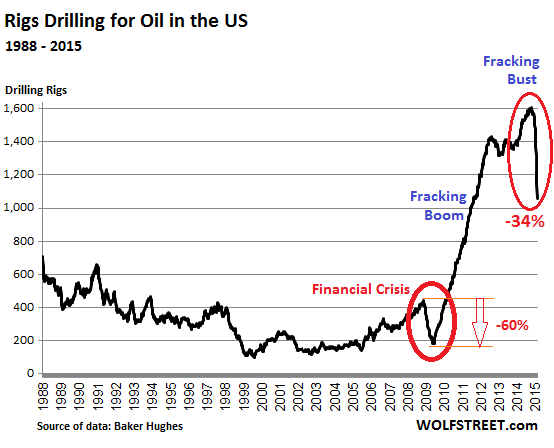
Are You Well if Oil is Not Well?


Where to from here?


The jolly crew of optimists at ZeroHedge, quoting some of their stable of doomsayers, are predicting that the oil crisis is just beginning… And I find it worth reading.

http://www.zerohedge.com/news/2015-02-16/why-price-oil-more-likely-fall-20-rather-rise-80

To follow on to some of the earlier questions posed by this blog:

What does your business look like in the age of an extremely strong dollar, a Euro depreciating against all other global currencies due to EQE, and oil at $20 a barrel?

Tough question, eh?  Well, I’m not one to call the price of oil…If I were I’d be in a different line of business; but I am one to encourage clients and executives to look at the world through multiple lenses.

The lens that is most interesting right now is the one that includes a dramatic re-set of oil production both domestically and abroad, along with a healthy heaping helping of the knock-on effects that will impact consumer and B2B markets geared to this phenomenon.

Remember, you don’t have to sell into oil exploration and production to feel this wrath…you only need to be near people and companies who do.

Their risk is your risk.   Stay ahead of it.

Stay tuned.  Your comments are welcome.